WhatsApp microlearning for independent pharmacy owners in Bolivia, with sales representatives enrolled in the same content and rewarded for their customers’ progress.
At a Glance
Client Profile
Organisation
Laboratorios Bagó de Bolivia S.A., part of Grupo Bagó. Leader of the Bolivian pharmaceutical market since 1998
Sector
Pharmaceutical, Bolivia. Winter OTC portfolio (cold and flu remedies, analgesics, antitussives)
Programme
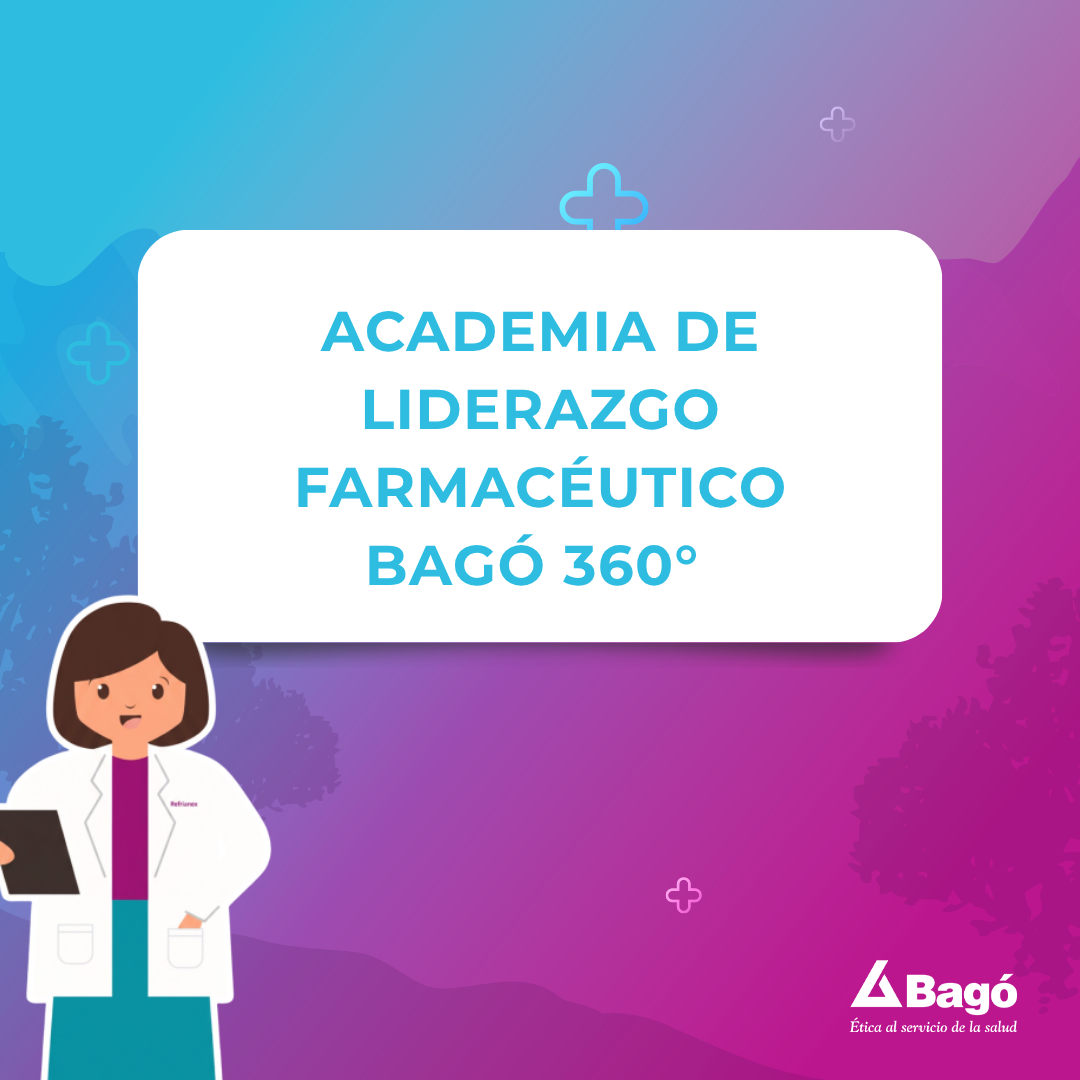
Academia de Liderazgo Farmacéutico Bagó 360° (Bagó Pharmacy Academy)
Audience
Independent pharmacy owners and the sales representatives who visit them. The owner is the professional legally responsible for what is dispensed and is usually the only one in the shop. She is not a Bagó employee: she runs her own business, with no HR function and no desktop computer.
Reach
168 owners in 8 cities (Santa Cruz, El Alto, Cochabamba, La Paz, Sucre, Tarija, Oruro, Cobija) and 35 sales representatives
Content
April to July 2026, one unit per week, each open for seven days
The Challenge
Bagó’s winter cold portfolio sells in a narrow window. Clinical knowledge has to reach the counter before the winter peak, and stock that does not move in those weeks becomes expiry risk: a return for Bagó, a lost sale for the pharmacy and a compliance exposure for both.
Two problems converged in the independent channel. Representatives were taking orders rather than advising, and owners were recommending without current clinical guidance and buying by instinct rather than by method.
Nothing available reached this audience. Classroom training means closing the shop. An e-learning platform assumes a desktop, a login and a password this channel does not have. And the 168 pharmacies sit across eight cities, which is what had defeated previous attempts: in-person training reaches one region at a time, and the effort and cost of bringing people to a live event cannot be justified for every initiative. Bagó’s internal projection before launch was adherence of between 61% and 70%.
But training these field leaders presented serious obstacles:
The Solution
WhatsApp is the operating system of Bolivian commerce: owners already use it to order stock and answer patient questions. Delivering there meant no app, no download, no login. Enrolment ran over WhatsApp, with no forms, after representatives introduced the Academy in person.
But the channel is not the strategy. The decision that defines the programme is the loop between representative and owner:
- Both sides of the visit, in the same content. The representative receives each unit with a commercial lens. The visit reinforces what the owner is about to receive rather than introducing it. The visit becomes a learning event, and the owner has someone to ask.
- The representative earns points for her customers’ progress, not her own. A representative’s Bagocitos (the Academy’s points system) depend on the pharmacies in her territory completing courses; supervisors score on team aggregate. The field force had a direct reason to help owners finish.
- Three courses in sequence: knowledge, judgement, practice. Clinical first (telling cold, flu and rhinitis apart; the five steps of dispensing; vulnerable populations; storage and expiry), then pharmacy finance (margin, stock, income statement, a dashboard of indicators for the pharmacy), then leadership (style, blind spots, from reactive to strategic, a personal dashboard). Every unit opens with a scene at the counter and leaves a tool to pin up behind it.
- Spaced repetition and retrieval practice. Twelve weekly units over three months, each open for seven days, with a quiz at the close. Methodology grounded in University College London research, adapted to the Latin American market.
- Rules-based re-engagement with human escalation. Bagó had real-time dashboards and weekly reports with participation alerts. When an owner stalled, automated messages fired according to where she was in the course, and the support team followed up persistent cases by hand.
Before and After
Before
- The representative’s visit opens with discounts and offers
- Classroom training that closes the shop and reaches one city at a time
- Expiry dates delegated to the assistant and unchecked; product sitting for months without moving
- Single-item orders, taken by the representative
- The patient is handed the product they ask for
After
- The visit opens with the week’s unit; the owner asks about the content
- One unit every Wednesday on the phone, between patients, in eight cities at once
- FEFO colour coding on the shelf, a weekly check, and fewer expiry returns
- Complete therapeutic kits, ordered on the owner’s initiative
- Filter questions before dispensing: is the patient hypertensive? Diabetic?
Results
Why It Worked
- The two-sided loop. Both sides of a commercial relationship took the same content, offset so the visit reinforced it, with an incentive that pays the representative for her customer’s learning. We know of no other programme in this sector treating the field force as pedagogy rather than distribution.
- Practice was measured, not consumption. Expiry returns, rotation method, filter questions and order composition show that behaviour changed. Evaluation was built on the client’s operational data from the outset.
- Transfer to routine. The expiry triage system became a physical reorganisation of the display cabinet, a weekly task for the assistant and a measurable reduction in returns. It survives without the programme.
- A population conventional training does not serve. These owners are not employees, have no training budget and no obligation to finish. Existing learning technology assumes an employment relationship and a desktop; this programme assumes neither.
- The best solution given the constraints. Limited connectivity outside the major cities, no e-learning infrastructure in the channel, phones with limited data and a selling season as a hard deadline. A bespoke app would have failed on adoption; an LMS on cost and login friction; classroom training would have closed shops, and participants themselves said scheduling was why they had abandoned previous courses. The 82% and 83% progression rates are the proof that the constraint analysis was correct.
“We are in the pharmacy almost all day, seventeen hours. I have not only read it, I have shared it with my staff.”
— Pharmacy owner, Oruro
Ready to train your field teams where they already are?
Get in touch to discuss how microlearning via WhatsApp can transform your programme’s training outcomes.
